Economic Substance Requirements for Foreign Holding Companies in China: What Groups Must Review in 2026
As foreign businesses navigate the complex regulatory landscape of operating in China, understanding economic substance requirements becomes paramount. In 2026, scrutiny from tax authorities will intensify, necessitating a proactive approach to compliance. Below is a comprehensive outline that dives deep into the essentials.
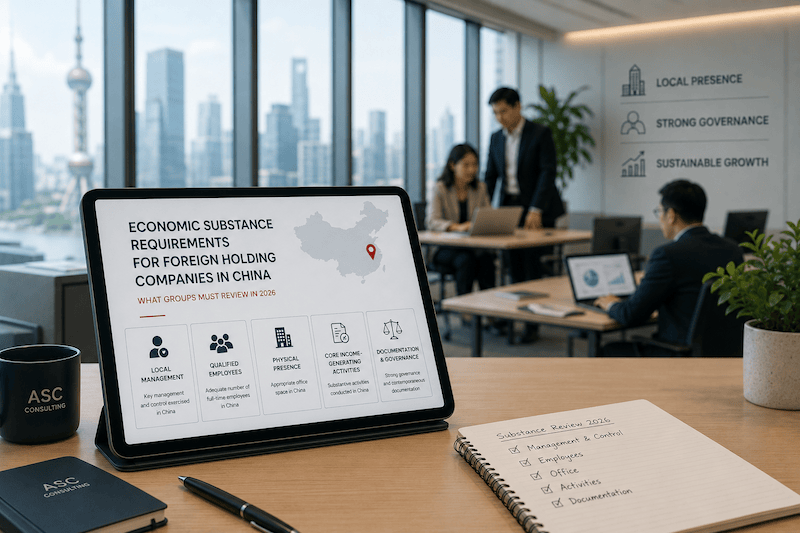
Introduction
In the world of international business, "economic substance" boils down to one crucial question: does your company actually do business where it claims to? For foreign holding companies operating in China, this concept takes on a significant meaning in 2026, as tax authorities ramp up their scrutiny of compliance.
Economic substance requirements mean that companies must demonstrate that they have real operational activities, not just paper structures, in the jurisdictions where they are registered. This encompasses having local employees, decision-making processes, and infrastructure that aligns with the income claimed.
As the regulatory landscape evolves, 2026 will bring new challenges for foreign holding companies in China that fail to adapt. Let's look at the key elements that businesses must address.
1. Understanding Economic Substance in China's Regulatory Framework
In the context of Chinese tax law, economic substance requirements are primarily driven by several key regulations:
China's General Anti-Avoidance Rule (GAAR)
China's General Anti-Avoidance Rule (GAAR) provides tax authorities with broad powers to challenge arrangements that lack economic substance. Implemented as part of China's commitment to the OECD's Base Erosion and Profit Shifting (BEPS) framework, GAAR enables authorities to reassess transactions they believe were structured primarily for tax benefits.
Beneficial Ownership Requirements
For foreign companies seeking to benefit from tax treaty advantages, demonstrating beneficial ownership is critical. A company must show that it is the actual owner of the income, not just a conduit entity funneling funds through China to a lower-tax jurisdiction.
Transfer Pricing Regulations
Foreign holding companies must also comply with transfer pricing regulations, which require that intercompany transactions be conducted at arm's length. This means prices for goods, services, and financing between related parties must reflect what independent parties would agree upon in similar circumstances.
2. What Triggers Scrutiny?
Tax authorities are increasingly vigilant about certain patterns that may indicate a lack of genuine economic substance. Key triggers include:
Shell Holding Entities
Shell holding entities, companies established solely to hold assets or intellectual property without any meaningful business activity, are a primary target for tax authorities. These entities often lack employees, decision-makers, and any real operational capacity.
Artificial Service Fees
Artificial service fees charged between group entities are a red flag for tax authorities. If a foreign holding company charges unrealistic fees for services that don't actually add value, this can lead to transfer pricing investigations.
Passive Income Structures
Foreign holding companies that primarily earn passive income (such as dividends, royalties, or interest) without having a physical presence or active management are often scrutinized for substance. Tax authorities may challenge the treaty benefits these companies seek.
Round-Tripping Capital
Round-tripping capital occurs when funds flow out of China and return as foreign investment, often for tax advantages. This is a common structure that Chinese tax authorities are trained to identify and challenge.
3. Data Cross-Referencing by Tax Authorities
China's Golden Tax System (金税系统) is one of the most sophisticated tax data collection systems in the world. It allows authorities to cross-reference vast amounts of financial data in real-time, including:
Payroll records
VAT invoices
Customs records
Banking transactions
This system means that inconsistencies in reporting are more likely to be caught. For instance, if a foreign holding company claims significant revenues or tax treaty benefits but lacks corresponding payroll costs or operational expenditure, this discrepancy will likely trigger an audit.
Audit risk is particularly heightened for companies that:
Report high levels of passive income without active operations
Use multiple intercompany agreements without supporting documentation
Hold intellectual property without corresponding R&D activities
Operate without local employees or decision-making capacity
4. Practical Self-Audit Checklist
As companies gear up to meet China's economic substance requirements in 2026, a practical self-audit checklist can serve as a roadmap for ensuring compliance. Here's what to focus on:
Evaluate Local Employees
Start by taking stock of local employees. Are there enough of them? Do they play a significant role in the operations? Having a solid team on the ground demonstrates that your company is not just a shell. This isn't just about numbers; it's about ensuring they have critical functions tied directly to the business.
Office Premises Assessment
Next, it's time for a walk-through of your office premises. Is it a real, functioning space, or just a desk in a coffee shop? Make sure you're using your physical location effectively to support business operations. Tax authorities are on the lookout for paper thin setups; so, a vibrant office setup could make a difference in proving your presence.
Income Source Alignment
Check that your income sources match your operational activities. If your company generates royalties or fees, make sure these are backed by genuine services or products delivered. Misalignment here is a red flag, signaling to tax authorities that you might be trying to game the system.
Decision-Making Location
Where are your crucial business decisions made? This needs to be clear and ideally in the jurisdiction where your holding company operates. If key decisions are getting made elsewhere, you might find yourself in hot water. Documenting these processes can add weight to your case.
Board Minutes Examination
Lastly, dive into your board minutes. They should accurately reflect the decisions made and the rationale behind them. If your minutes look like they were written purely for decoration, that could spell trouble. Keep them detailed and aligned with actual decision-making that supports operational substance.
By systematically reviewing these areas, foreign holding companies can bolster their compliance with China's economic substance requirements and avoid potential pitfalls in the coming years.
5. Consequences of Failing Substance Tests
Failing to meet economic substance requirements in China can have serious repercussions for foreign holding companies. Understanding these consequences is crucial.
Tax Reclassification:
If your company is deemed non-compliant, it runs the risk of being reclassified for tax purposes. This means your business could be taxed at a higher rate, losing the benefits of preferential tax regimes. Essentially, what starts as a minor oversight could escalate to significant financial implications.
Treaty Benefit Denial:
Another potential fallout is the denial of tax treaty benefits. Many foreign companies rely on treaties to avoid double taxation or to lower withholding taxes. If your economic substance is questioned, you may find yourself losing these benefits, which can directly impact your bottom line.
Penalties:
Lastly, let's talk about penalties. The government doesn't take non-compliance lightly. Companies may face substantial fines or other sanctions. These penalties not only hurt financially but can also damage your reputation in the market.
In a nutshell, staying ahead of compliance is crucial, not just to avoid penalties, but to ensure your business remains competitive and sustainable in China's regulatory landscape.
6. How ASC Consulting Can Help
Navigating the maze of economic substance requirements can feel overwhelming, but ASC Consulting is here to make the process straightforward. Here's how we can support your international group in aligning with China's regulatory landscape.
Reviewing Structures
First off, we provide comprehensive reviews of your current structure in China. We'll help you assess whether your holding company meets the necessary substance thresholds. Our goal is to ensure that your operations aren't just a paper trail but reflect actual business activities. We'll identify potential gaps and recommend adjustments to bolster your compliance.
Updating Intragroup Agreements
Next, we assist in updating intragroup agreements. These documents need to align with your operational reality , in other words, they should reflect genuine economic activities. We'll work with you to revise these agreements so they're not just compliant on paper but also demonstrate that your business is functioning as intended, with real roles and contributions from each entity involved.
Preparation for Documentation
Finally, we'll guide you through the documentation process. Having the right paperwork is crucial when demonstrating your economic substance to tax authorities. We help you prepare comprehensive documentation that portrays your company's substance clearly. This includes everything from employee roles and decision-making processes to office premises utilization. With our help, you'll be ready to show that your presence in China isn't just a facade.
In short, ASC Consulting is your partner in ensuring that you not only meet but exceed economic substance requirements in China. With our expertise, you can navigate these complexities with confidence.
Conclusion
Navigating the regulatory waters in China isn't getting any easier, especially when it comes to economic substance requirements for foreign holding companies. As we look toward 2026, understanding these requirements is crucial. Not only do these rules determine how companies are taxed, but they also impact the benefits they can gain from international agreements.
Key takeaways include the need for transparency and operational substance. Holding companies should reflect meaningful activities in China, with genuine local employees, functional office space, and decision-making processes that happen within the country. If you're not checking these boxes, you could end up facing significant tax reclassifications, denied treaty benefits, or even hefty penalties.
Proactivity is your best friend here. Ignoring these changes is a recipe for trouble. The regulatory environment is complex, but keeping a close eye on compliance will not only help you avoid pitfalls but also position your company for future success. So, take a moment to review your structures, operations, and documentation. It's a small investment of time that could save you from costly consequences down the road.
Frequently Asked Questions – Economic Substance Requirements for Foreign Holding Companies in China
What are economic substance requirements?
Economic substance requirements ensure that companies have real operations and activities in the jurisdictions where they are registered, especially for tax purposes.
Why are these requirements important for foreign holding companies?
Compliance is critical to avoid potential penalties, tax reclassifications, and denial of treaty benefits, which can greatly affect your business's financial standing.
How can I demonstrate economic substance in China?
You must show tangible operations, such as local employees, physical office space, and genuine decision-making processes that align with your claimed income.
What kind of scrutiny can foreign holding companies expect?
Tax authorities may look for red flags like hollow holding entities or artificial service fees that suggest a lack of genuine business activity.
What are the consequences of non-compliance?
Failure to meet these requirements can lead to significant financial penalties, reclassification for tax purposes, and denial of tax treaty benefits.
How can ASC Consulting assist with compliance?
ASC Consulting offers comprehensive reviews of corporate structures, updates to intragroup agreements, and support in documentation to ensure compliance with economic substance requirements.
What is the Golden Tax System?
China's Golden Tax System enables authorities to cross-check data in real-time, making it essential for foreign businesses to ensure accuracy in their filings.
What should I do to prepare for the 2026 regulations?
Proactively assess your structures, operations, and documentation to meet upcoming compliance standards and avoid potential pitfalls.
Don't wait for tax authorities to come knocking, get ahead of China's economic substance requirements before 2026 with a tailored compliance review from ASC Consulting.


Comments