Economic Substance Requirements in Offshore Jurisdictions: Is Your International Company Structure Still Compliant in 2026?
As businesses continue to take advantage of offshore jurisdictions for tax efficiency, the landscape is evolving swiftly. Economic substance requirements are now a key component in determining whether your international company structure is compliant. Starting from 2026, regulatory frameworks are tightening, and the landscape is becoming increasingly complex.
At its core, economic substance requirements ensure that companies operating in offshore locations have a genuine economic presence, not just a paper existence to enjoy tax breaks. A failure to meet these requirements can lead to serious repercussions: financial penalties, loss of tax benefits, and even forced liquidation.
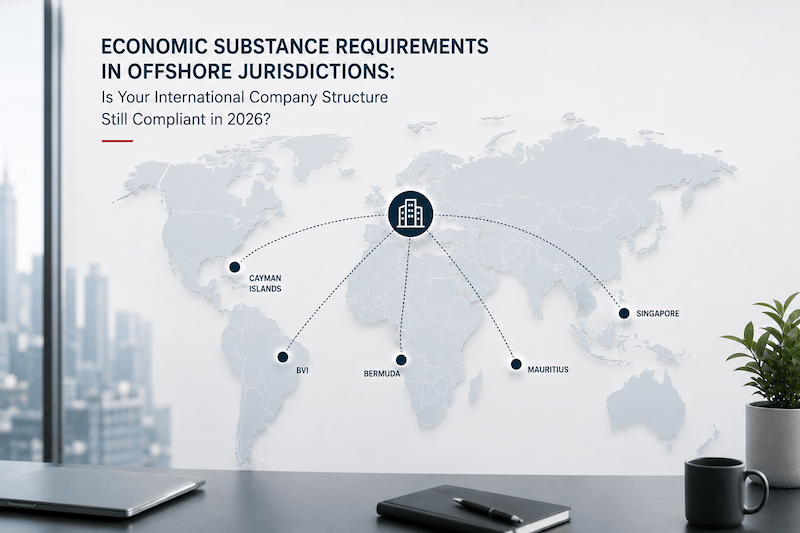
Economic Substance Rules Across Major Offshore Jurisdictions
Cayman Islands:
The core principle revolves around "substantial activities." Your company must demonstrate real engagement in the local economy, minimum levels of local expenditure, a physical presence, local employees, and operational activities conducted there.
British Virgin Islands (BVI):
The BVI has implemented its own economic substance test, mandating that businesses engage in substantial activities within the jurisdiction. Sectors such as banking, insurance, and fund management face heavier scrutiny, requiring stricter compliance with local operations and financial commitments.
Bahamas:
The Bahamas provides its own set of economic substance rules aligned with the Cayman Islands and BVI principles. Local requirements typically include having a physical office and personnel actively involved in company operations. While the Bahamas may present somewhat relaxed expenditure thresholds compared to counterparts, compliance is critical across the board.
Understanding "Adequate Substance" in Practice
Local Employees:
Many jurisdictions require you to hire a certain number of local or resident workers. The quality and roles of these employees matter, they should be actively involved in the company's operations and decision-making processes.
Local Expenditure:
Your business needs to spend a minimum amount in the jurisdiction where it claims resident status. This includes salaries, office rent, supplies, and other operational costs. Cutting corners on expenses raises red flags with regulators.
Active Management Decisions On-Shore:
Decision-making must happen in the jurisdiction itself. This means holding board meetings on the ground, keeping business records there, and demonstrating that managerial operations are rooted in the local environment.
How Tax Authorities Test Substance
When your offshore company faces a substance audit, tax authorities look for:
Documentation:
They require supporting documents demonstrating business activities, contracts, invoices, employee records, and financial statements. Missing documents raise red flags.
Operational Scrutiny:
Authorities examine your operational footprint. Evidence of physical presence, office space, equipment, and local operations, is crucial. A company running out of a PO box will likely run into issues.
Decision-Making Assessment:
If key managerial decisions are made outside the jurisdiction, that's a strike against adequate substance. Authorities want to see that senior management is based locally and business activities are genuinely directed from the jurisdiction.
Penalties for Non-Compliance
Financial Penalties and Back Taxes:
Companies that fail the substance test face hefty financial penalties and may be required to pay back taxes on income generated while non-compliant, leading to significant unplanned expenses.
Loss of Tax Benefits:
Many offshore jurisdictions offer attractive tax incentives to companies maintaining a genuine operational presence. If you can't prove substantial activities, those benefits will be revoked.
Risk of Forced Liquidation:
In the worst-case scenario, non-compliance can lead to severe regulatory action, including the forced liquidation of your company. Tax authorities are increasingly aggressive in rooting out shell entities.
When to Restructure
If your current setup lacks the required economic substance, consider migrating to jurisdictions that offer a better balance of tax benefits and compliance, such as Hong Kong, Singapore, or the UAE. These locations maintain attractive tax policies and established reputations for policy stability.
Establishing a genuine operational footprint, hiring local employees, engaging in substantial local activities, and making necessary investments, satisfies economic substance requirements while positioning your company as a legitimate market player. The earlier you assess your current structure and identify red flags, the better equipped you'll be to navigate potential changes.
Conclusion
As we approach 2026, understanding economic substance requirements is critical for international companies. Adequate substance means having local employees, meeting minimum local expenditure levels, and ensuring that management decisions are carried out within the jurisdiction.
Now is the time to take a hard look at your international structure. Are you compliant? Are you prepared to adjust to evolving regulations? Don't wait for the compliance crunch to hit, book an international structure compliance audit with ASC today.
Frequently Asked Questions – Economic Substance Requirements in Offshore Jurisdictions
What are economic substance requirements?
Economic substance requirements ensure that businesses in offshore jurisdictions have a genuine operational presence, preventing tax avoidance through mere paper registrations.
Why are economic substance requirements important?
Compliance is vital to avoid financial penalties, loss of tax benefits, and regulatory actions that could jeopardize your business operations.
How can I ensure my offshore company meets these requirements?
Ensure your company has local employees, adequate local expenditure, and active management decisions made within the jurisdiction.
Which jurisdictions have specific economic substance rules?
Key offshore jurisdictions like the Cayman Islands, British Virgin Islands (BVI), and the Bahamas have distinct economic substance requirements that companies must meet.
What are the risks of non-compliance?
Non-compliance can result in hefty fines, back taxes, and potential forced liquidation of your business, impacting your investments and market credibility.
Can I restructure my business to meet compliance?
Yes, restructuring may be necessary if your current setup lacks adequate economic substance, allowing you to optimize your operations and mitigate risks.
What steps should I take if I suspect non-compliance?
Evaluate your current structure immediately and consult with experts like ASC Consulting to address any compliance gaps proactively.
How does ASC Consulting assist companies with compliance?
ASC Consulting provides expert guidance on navigating economic substance requirements, helping businesses establish compliance and optimize their international structures.
Is your offshore company structure ready for 2026 economic substance rules? Book a compliance audit with ASC Consulting and protect your tax advantages.


Comments